How Banks Profit From Your Deposits (And Why It Matters)
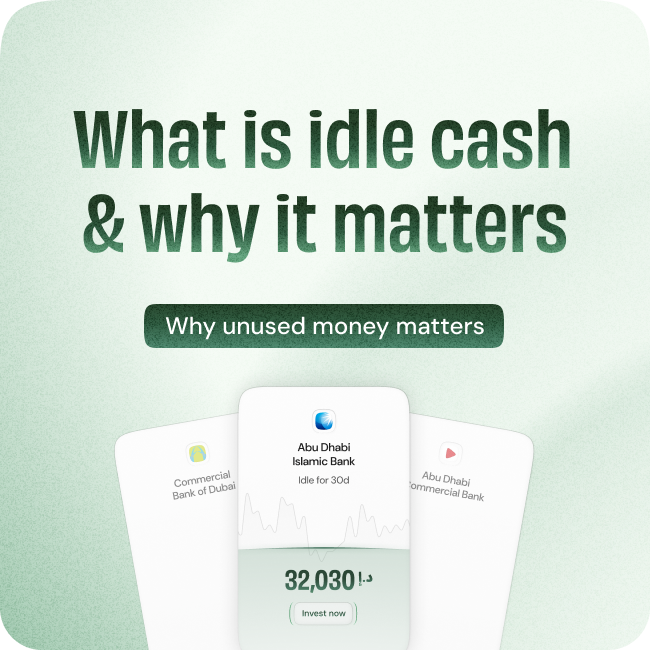
In the UAE, customer deposits are not just a feature of banking, they are the system’s foundation Most people think money sitting in a bank account is “doing nothing.” In reality, bank deposits are one of the most valuable assets in the financial system. Understanding how banks profit from deposits helps explain: Why savings rates stay low Why idle cash benefits the system more than the individual Why “doing nothing” with money is still an active economic decision This isn’t about blame.It’s about understanding the structure. The Simple Explanation When you deposit money in a bank, the bank does not store it untouched. Deposits are used to: Lend to individuals and businesses Manage liquidity and regulatory requirements Generate interest income The difference between what banks earn on that money and what they pay you is called net interest margin. That spread is one of the core profit engines of banking. Net Interest Margin Banks typically: Pay depositors very little interest Earn higher interest by lending or investing that money The gap between the two is where profit is made. Globally, net interest income often accounts for 40–60% of a retail bank’s revenue, depending on the market and interest-rate environment. This is not a secret or a flaw.It’s how modern banking works. Why Your Savings Rate Feels Low From the bank’s perspective: Deposits are low-cost funding Stability matters more than generosity Rates are adjusted only when competition or regulation forces it From the customer’s perspective: The balance feels safe The number doesn’t go down The cost of low returns is invisible This asymmetry explains why large balances often earn very little. UAE Context: Why This Matters More Than People Realize In the UAE, deposit-heavy behavior is especially common. Several factors contribute: A high proportion of salaried expatriates Limited long-term certainty about residency duration Preference for liquidity and flexibility Historically low savings account yields Public disclosures and central bank data show that UAE banks hold hundreds of billions of dirhams in customer deposits, making deposits one of the largest components of bank balance sheets. For banks, this is stable, low-cost capital. For individuals, it often means large balances earning minimal returns — especially in current accounts. Idle Cash vs Intentional Savings Not all bank deposits are a problem. Intentional savings: Emergency funds Short-term goals Planned expenses These serve an important purpose. Idle cash, however: Has no defined role Sits due to indecision or delay Often remains untouched for years This is where the imbalance matters most. Idle cash still works — just not for you. Inflation: The Quiet Counterforce Even modest inflation changes the equation. Historically: Inflation averages around 2–3% annually over long periods Cash earning close to zero loses purchasing power There is no visible loss.No daily volatility.No emotional signal. Just slow erosion. This is why deposit-heavy strategies often feel safe in the short term but fall behind over time. Why This System Persists From a behavioral perspective, this system works because: The cost of inaction is invisible The discomfort of action is immediate People associate volatility with risk, not inactivity From a structural perspective: Banks are not incentivized to change depositor behavior The system rewards stable balances No one actor is behaving irrationally. The outcomes are simply a result of incentives and defaults. What This Means for Individuals Understanding how banks profit from deposits doesn’t mean abandoning banks. It means: Being intentional about what money is for Distinguishing between safety and stagnation Recognizing that “waiting” is still a financial choice Wealth outcomes improve when money has a role — even a modest one — rather than remaining unassigned. How This Thinking Informs Sav This structural imbalance is something we think deeply about at Sav. Not in terms of attacking banks —but in terms of helping individuals understand what’s happening beneath the surface. When people see: Where their money sits How it’s used Who benefits from inaction They’re better equipped to make calm, informed decisions. FAQs 1. What is Sav? Sav is a money-management app, allowing you to stick to your money goals, plan for the future, and spend confidently in the present.Your Sav card helps you meet your goals – just connect your bank account, top up your Sav card, choose goals you would like to set aside money for, and apply rules that automatically allocate funds toward your goals. The money set aside for your goals is safe. It is always available on your prepaid card and held with our partner financial institutions licensed by the CB UAE.You can use your Sav card to get additional rewards and cashbacks while spending. Check out our offer page to find the latest deals and promotions. 2. Is Sav a bank? No, ‘Sav Technologies Limited’ is a technology company registered in the Dubai International Financial Centre, Dubai, UAE, with registration number # 5474. Through our banking partnership with Mashreq Bank, VISA and NymCard, we provide VISA prepaid cards. 3. Does Sav issue bank accounts? No, Sav does not issue any bank accounts. Instead, Sav offers prepaid Visa cards issued by our partner bank, Mashreq Bank PSC, pursuant to their license from Visa. The money in your savings goals is always held with our partner bank in your individual Sav Card. 4. How is my Mashreq account different to the Sav account? At Sav, we do not issue any bank account. It’s a prepaid Visa card. Share article Instagram Linkedin Facebook-square Twitter-square